

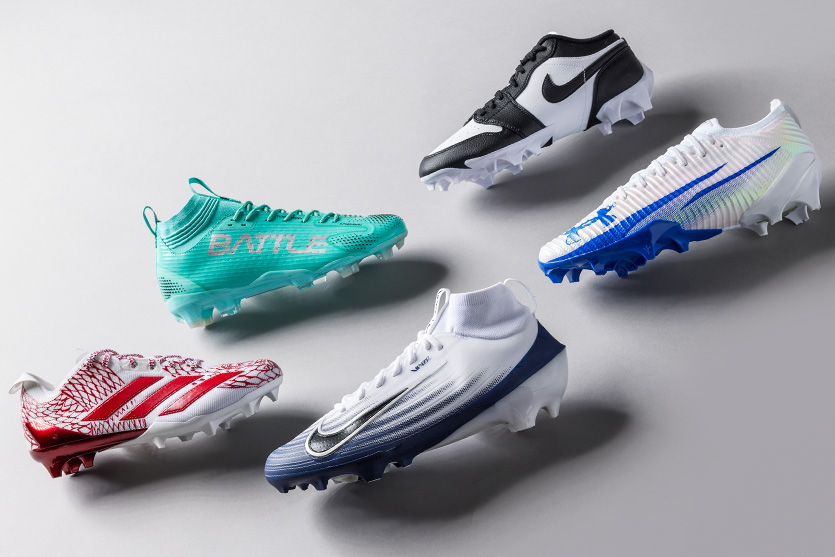
Picture this: a winger with explosive pace slips on the wrong boots before a match. First sprint, wrong push-off, lost half a second. At the amateur level, that’s a minor inconvenience. At the professional level, that half-second is the difference between a goal and a clearance. The equipment you wear is never just equipment; it’s the extension of your technique.
Most players pick football shoes based on brand loyalty or aesthetics. That’s a costly mistake. The right pair of football shoes, matched to your playing style and position, can sharpen your touch, improve your acceleration, and reduce injury risk over a full season. This article breaks down exactly how to make that choice with professional precision. –
How Playing Position Should Drive Your Football Boot Choice
Your position dictates what you demand from your feet and, therefore, from your boots. A central defender and a number 10 might share the same pitch, but they need fundamentally different footwear.
Forwards and wingers need lightweight football shoes with a minimal upper for a clean striking surface and close ball control. Speed is the priority, so a low-profile, snug fit reduces drag and maximizes ground contact during acceleration.
Midfielders cover the most ground in any match, often 10–13 km per game. They need football boots that balance cushioning with responsiveness. A slightly padded collar and a textured upper for pass accuracy are non-negotiable at this level.
Defenders need stability and power. Wider studs and a reinforced toe box protect against heavy challenges, while a firmer sole plate converts brute force into effective clearances.
Goalkeepers are often overlooked in this conversation. They need football shoes with strong ankle support, a grippy sole for lateral movement, and a broad striking zone for distribution.
⭐ Featured Snippet
The right football shoes depend on your position and playing style. Forwards need lightweight, low-profile boots for speed and touch. Midfielders need balanced cushioning. Defenders need stability and power. Matching your boots to your role directly improves performance and reduces injury risk.
Stud Configuration and Surface Type: The Performance Variables Pros Never Ignore
Even the best football boots will fail you if the stud pattern doesn’t match your surface. This is where many players, even experienced ones, lose marginal gains they’ve worked hard to build.
| Surface | Recommended Stud Type | Boot Code | Best For |
| Natural Grass (Firm) | Conical/Bladed Studs | FG (Firm Ground) | Most outdoor matches |
| Soft/Wet Grass | Longer, Fewer Studs | SG (Soft Ground) | Muddy or waterlogged pitches |
| Artificial Turf (3G/4G) | Short Rubber Studs | AG (Artificial Ground) | Training and synthetic surfaces |
| Futsal / Indoor | Flat Rubber Outsole | IN (Indoor/Futsal Boots) | Hard courts, futsal halls |
| Gravel / Hard Ground | Multiple Small Studs | HG (Hard Ground) | Dry recreational pitches |
Futsal boots deserve a specific mention. Futsal is a technically demanding format played on hard, flat surfaces. The right futsal boots have a flat, gum-rubber sole for grip without sliding, a tighter fit for rapid directional changes, and a low profile to keep your center of gravity controlled. Using outdoor football studs on an indoor surface not only hurts performance, but it also damages the court and increases your ankle sprain risk significantly.
Football studs on the wrong surface flatten prematurely, reduce grip at critical moments, and transfer impact force incorrectly up the kinetic chain. That means joint fatigue and a shorter playing career.
Pro tip: Professional players often maintain two or three pairs of boots, one for firm ground, one for soft or wet conditions, and one for training on artificial surfaces. Rotating correctly extends boot life and protects your joints.
Upper Material, Fit, and Feel: The Details That Separate Good Boots from the Right Boots
Once you’ve narrowed down position and surface, the final layer of decision-making comes down to the upper material and overall fit, factors that directly affect ball feel, shooting accuracy, and long-term comfort.
Leather uppers (kangaroo or synthetic leather) mold to the foot over time, offering an unmatched natural feel. They’re preferred by technical players who rely on first touch and close control. The trade-off is slightly more weight when wet.
Synthetic uppers are lighter, more water-resistant, and more consistent in fit across conditions. Modern high-grade synthetics now closely replicate the leather feel, making them the standard in most professional-level football shoes.
Knit/sock-fit constructions have become popular for their glove-like feel and reduced internal friction. These suit players who prioritize sensitivity over protection, typically attacking midfielders and wingers.
Fit is non-negotiable. A boot that’s too narrow compresses the forefoot, causing blistering and reducing push-off power. A boot that’s too wide creates internal slippage, wasting energy with every step. Always try boots on with your match-day socks, and check that there’s no more than a thumb’s width of space at the toe.
Choose Your Boots Like a Professional, Not an Observer
The gap between a player who looks good and a player who performs consistently often comes down to preparation, and footwear is a core part of that preparation. Your football shoes affect your sprint mechanics, your passing accuracy, your challenge technique, and your injury resilience across an entire season.
Map your position to your boot requirements. Match your stud configuration to your surface. Prioritise fit and upper material based on your technical role on the pitch. These are not preferences; they are performance variables, and professionals treat them accordingly.
Now the question is worth asking yourself: are the boots you’re currently wearing actually built for the way you play?